Wednesday, November 18, 2020

Mental well-being at workplaces

Being actively employed is generally good for the mental well being of a person. However, there are situations at work that can give rise to unhealthy levels of stress. With the present work-from-home arrangements due to Covid-19, it can cause additional stress to a persons mental well-being.

Ministry of Manpower (MOM), Singapore National Employers Federation (SNEF) and National Trades Union Congress (NTUC) have jointly issued an advisory on the mental well-being at workplaces. Click here for the advisory on mental well-being at the workplace.

Monday, November 16, 2020

Nearly 140 workplace safety breaches uncovered at waste recycling companies: MOM

Based on MOM facebook post and news releases, it carried out WSH enforcement operations targeting waste recycling plants. More than 30 companies were inspected which revealed more than 140 safety lapses.

More details can be found here

As employers, it is their duty to ensure the safety and well being of their employees. It could also lead to fires and damage to their properties. 

Friday, November 6, 2020

Workers stranded 20 storeys high on gondola rescued

This incident was reported on Asiaone. 2 workers were stranded in the Gondola they were working in as the gondola broke down, and was tilting on one side. SCDF officers arrived and rescued them.

Important point to note: the workers were putting on their safety harness and had their safety helmets on. The safety harness probably saved them from potential fall from height accident.

Also, they did not try to climb through the window on their own, but instead waited for rescue.

For more details of the accident,  refer to the news articles, on Asiaone


Learning Report (from MOM) - Fatal Accident Involving Failure of a Tower Crane

On 4 November 2019, the jib of a Luffing Jib Tower Crane failed during a lifting operation at a construction worksite along Tan Tock Seng Link, near central Singapore.
 
On the said morning, the Luffing Jib Tower Crane (“the TC”) was lifting a bundle of scaffolding material when the jib of the TC suddenly buckled. This resulted in the load and the hook block of the TC plummeting down to the ground. The accident resulted in one fatality and an injury to another worker.

MOM has published a Learning Report on the accident. The link to the report is here: Learning Report: Tower Crane Failure

Sunday, October 11, 2020

Charged with Corruption to be Lenient in Supervision of Contractor Work

On 9 September 2020, two persons were charged in court for alleged corruption:
a)    Cheow Hock Mun, a 49-year-old male Malaysian, and a Health, Environment and  Safety Specialist at Chevron Singapore Pte Ltd
b)    Neo Gim Chwee, a 49-year-old male Singaporean, and a Project Manager at Hiap Seng Engineering Ltd (“HSE”)

Thursday, September 21, 2017

Directors of Workplace Safety and Health Training Providers jailed for fraudulent practices

Two Directors of Workplace Safety and Health Training Providers were jailed for fraudulent practices under the Workplace Safety and Health Act in 2017. Mr. Sellachamy Somasundaran, Director of Maha Safety Training Centre Pte Ltd and Mr. Md Abu Zahin Mostafizur Rahman, Director of Pioneer Skill Training Centre Pte Ltd had both pleaded guilty to fraudulently issuing the “Building Construction Supervisor Safety (“BCSS”) course certificates/safety passes without conducting any lessons and assessments.
In the first case, Mr. Sellachamny Somasundaran was charged with forging 20 BCSS course certificates/safety passes between September 2015 and December 2015 and had pleaded guilty to the charges. He was sentenced on 7 August 2017 to a jail sentence of 10 months.
In the second case, Mr. Md Abu Zahin Mostafizur Rahman was charged with forging 14 BCSS course certificates/safety passes between October 2015 and December 2015 and had pleaded guilty to the charges. He was sentenced on 15 Sep 2017 to a jail sentence of 10 months. 
The Ministry of Manpower (MOM) had since cancelled all the fraudulent BCSS records uploaded by the two Training Providers. The BCSS is a course for workers appointed to take on the construction supervisory role. The 34 hour course equips the workers with construction related knowledge on safety and health issues and how, as supervisors, they can help to implement the safety and health measures at the workplaces.
MOM takes a very serious view of any breach to the Workplace Safety and Health Act as workplace safety and health issues directly affects worker’s lives, safety and health. Regular audits on the training providers are conducted to ensure full compliance and competency of the training providers. Anyone who is aware of any malpractice by any training provider can notify MOM immediately at www.mom.gov.sg/contact-us.

Source: WSH Bulletin by WSH Council, Singapore 

Friday, October 10, 2014

Common hazards in construction sites

1. Open sides of buildings

The most common hazard in the construction site is that open sides of buildings or structures are not sufficiently barricaded, if at all. This could potentially lead to fatalities. Even if it does not result in fatality, it will result in serious injury.

 
Worker at top level - no edge barricade; the worker was not even wearing safety harness.
 
Open sides during formwork erection
 
2. Unsafe work platform
 
It is very common to see workers using single metal deck as their work platform, especially during the erection of formwork. A single metal deck may not be strong enough to take the weight of the worker and may cave in. It is also possible that the worker may lose balance and fall down.


Makeshift work platform
 
3. Floor openings not properly covered
 
Another common hazard in construction sites is that the floor openings are not properly covered. Sometimes, a piece of plywood is placed over the opening, but it is not secured. It thus becomes easily dislocated and the floor opening becomes exposed. At other times, flimsy piece of plywood is used, which can give way under the weight of a person.
 
It is also common that openings for pipes are not covered - the thinking is that it is too small for someone to fall through. However, it must be remembered that the second biggest killer in worksites is being hit by falling object.


Can you see the floor opening? Just waiting for someone to step on it...
 
Opening on the floor for pipes, but anything could drop through them.
 
 4. Protruding objects on the floor
 
It is very common to find nails and rebars protruding from the floor. These pose tripping hazards and can have serious consequences.

One worker tripped and fell on the protruding rebar, missed the spine by a mere few centimetres. (See the blood in the drain)


Thursday, June 19, 2014

One of the Best Safety Speeches Ever By Alcoa CEO

Sometimes the best way to affect large-scale change is to focus on changing one important habit, what Charles Duhigg calls a keystone habit. Here is the story of Alcoa’s transformation.
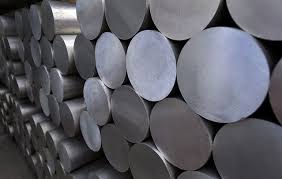


One October day in 1987, the new CEO of the Aluminum Company of America, or Alcoa, took to the stage of a ballroom in a New York hotel. Paul O’Neill had been a surprise choice for head of one of the world’s biggest aluminium product manufacturers. The former US Government bureaucrat was virtually unknown in the ranks of Wall Street, and the company’s many investors were nervous about his ability to stem the losses Alcoa had recently accumulated by launching unprofitable new lines. To address this unease, Alcoa had decided to gather together prominent investors and stock analysts and formerly introduce its new leader to them.
Standing on the ballroom stage, the 51-year-old O’Neill looked every bit the chief executive – trim and taut, with a dignified head of white hair and a warm, confident manner. The audience relaxed. You could almost hear the collective sigh of relief that said, ‘Everything is going to be OK’. Then O’Neill opened his mouth.

‘I want to talk to you about worker safety’, he said. ‘Every year, numerous Alcoa workers are injured so badly that they miss a day of work. Our safety record is better than the general American workforce, especially considering that our employees work with metals that are 1500 degrees and machines that can rip a man’s arm off. But it’s not good enough. I intend to make Alcoa the safest company in America. I intend to go for zero injuries.’
The audience’s relief turned into confusion. This was not what they were accustomed to at such events. Where was the promise to raise profits and lower costs? Where was the passionate criticism of corporate regulations and taxes? Where were all the comforting buzzwords like ‘synergy’, ‘alignment’, ‘rightsizing’ and ‘co-opetition’? What was all this talk of worker safety? Wasn’t that something that someone who was in favour of regulation might say?
O’Neill continued, seemingly oblivious to his listeners’ reactions: ‘Before I go any further, I want to point out the safety exits in this room. There’s a couple of doors in the back, and in the unlikely event of a fire or other emergency, you should calmly walk out, go down the stairs to the lobby, and leave the building’.
The comments were greeted with a deafening silence. The confusion had become outright bewilderment. One investor, remembering O’Neill’s stint in Washington in the 1960s, thought, ‘Guy must have done a lot of drugs’. Then, tentatively, hands started going up. In a desperate attempt to find familiar ground, people started asking about capital ratios and inventories and the like.
‘I’m not certain you heard me’, O’Neill said. ‘If you want to understand how Alcoa is doing, you need to look at our workplace safety figures. If we bring our injury rates down, it won’t be because of cheerleading or the nonsense you sometimes hear from other CEOs. It will be because the individuals at this company have agreed to become part of something important. They’ve devoted themselves to creating a habit of excellence. Safety will be an indicator that we’re making progress in changing our habits across the entire institution. That’s how we should be judged.’
After the presentation, many analysts called their clients and advised them to sell all their stock in Alcoa – immediately. One of them told a client, ‘The board put a crazy hippie in charge and he’s going to kill the company’. It would turn out to be the worst financial advice those analysts ever gave.
A year later, Alcoa’s profits would hit a record high. Thirteen years later, on O’Neill’s retirement, the firm’s annual net income would be five times greater than it had been when the CEO was hired. His company would also be one of the safest in the world.
‘I knew I had to transform Alcoa’, O’Neill would later explain. ‘But you can’t order people to change. So I decided I was going to start by focusing on one thing. If I could start disrupting the habits around one thing, it would spread throughout the entire company.’
O’Neill concentrated on changing one influential, or keystone, habit throughout his organisation – safe practice – and this had a domino effect, causing many other habits to change too. For the better.

Sourced from Charles Duhigg (2012), The Power of Habit: Why We Do What We Do in Life and Business, Random House, New York.

So what made O'Neill's safety speech one of the best in the 20th century?
He started with why.  As Simon Sinek says in the brilliant book, Start with a Why, great leaders communicate from the inside out.  He started with a powerful "why".  O'Neill's speech certainly got the attention of his audience.  He then moved to "how" they were going to improve safety and then the "what".  Other leaders communicate the "what", "how" and then the "why".  It would have been easy (and expected) for him to have just talked about improving sales and reducing costs (what) and then "how: they would do it.  This would have kept shareholders and share brokers happy.  Instead, he chose to talk about safety and become the champion for Alcoa workers.
One Behaviour Change at a Time
As quoted in The Power of Habits, O’Neill said, “you can’t order people to change. That’s not how the brain works. So I decided I was going to start by focusing on one thing. If I could start disrupting the habits around one thing, it would spread throughout the entire company”.
He chose improving safety as the key habit to bring the entire company together.  He chose a habit that would have everyone in alignment - unions and managers.  And it meant total operational transformation.
Humans can only learn and remember so much information at once.  The more information you give people – the more they can get paralyzed by it. According to Chip and Dan Heath from Made to Stick, creating a memorable message is all about stripping an idea down to its core.
O'Neill did this brilliantly when he focused the workforce on one aspect - safety.  And then he made this memorable by creating the tagline "Zero injuries".
The Power of the Group
But what he also did rather skilfully was to encourage group behaviour.   He encouraged Alcoa workers to to consider the safety of the group rather than themselves.  He rallied the workforce to work together for a common goal.
Humans see themselves in terms of other people and groups.  Evolution has taught us that it is beneficial to live in tribes, where we can share out the work of daily survival. 
O'Neill harnessed the strong human need for group identity to build a thriving organisation. The trick in using group identity when wanting staff to change behaviour or embrace a new goal is to word it so they make a decision based on what’s best for the group.  Activating peer pressure is an effective way to get a group to persuade others to act in a certain way
And you'll notice that O'Neill never used the word "I" in his speech.  Saving lives wasn't about him. It was about the group - it was about the Alcoa workforce.  He also cleverly used a shareholder meeting, to let his staff know, that he wasn't there to increase shareholder returns.  He was there to improve their quality of life, to ensure that they would arrive home safely at the end of the day.  By launching his first speech to outsiders, he powerfully communicated to staff, just how committed he was to improving their workplace.  That he could be trusted.  That he was on their side.
He even took this further.  According to Tim O'Bryan, in an article titled "Analytical Decision Making and the Alcoa Transformation", O'Neill introduced a new companywide policy that whenever someone was injured, that the unit president had to report it to O’Neill within 24 hours and present a plan for making sure it never occurred again.
This opened up the flow of communication.  Workers told their floor managers who told the vice president about injuries, but also to raise warnings when they saw a potential problem.  A suggestion box was filled with ideas for solutions, so that if the vice president requested a plan, a collection of suggestions was submitted.  
Spare No Expense on Safety
O’Neill believed that the best way to keep employees staff was to discover why injuries were occurring in the first place.  This was done by studying what was going wrong in the  manufacturing process.  Employees received training about quality control and how to work more efficiently.  By ensuring that employees developed the habit to do tasks right in the first place, their work became safer. 
Starting with his inaugural speech, Paul O'Neill transformed Alcoa into an efficient, open communication workplace that was the safest aluminium company on earth.  By transforming workplace safety into a daily habit, O'Neill improved efficiency and sales.  By taking care of the "why", he took care of the "how" and "what".

Tuesday, April 16, 2013

WSH (Work at Heights) Regulations 2013 & WSH (Construction) (Amendment) Regulations 2013

The Workplace Safety and Health (Work at Heights) Regulations 2013 (WAH Regulations) have been gazetted and published on 15 April 2013. It will come into operation on 1 May 2013.

About the new Regulations

The key provisions in the new Regulations are:
(a) Fall Prevention Plan (FPP) – A specific provision mandates the establishment and implementation of a FPP in accordance with any Approved Code of Practice issued by the WSH Council. This provision will only be effective on 1 May 2014 to allow industry time to build up their capability;
(b) Permit-to-work System (PTW) – A specific part pertaining to the control of work at height where a person could fall from a height of more than 3 metres. This will also be effective on 1 May 2014 to allow industry time to have people trained and qualified to implement the PTW system;
(c) Training of workers, supervisors and other WAH personnel – Training requirements for work at height personnel are emphasised to ensure effective conduct and oversight of work performed at heights;
(d) Work on Roof and Fragile surface – Specific provisions on safe working on roof as well as working near fragile surface are included to require persons working there to be more vigilant; and
(e) Industrial Rope Access System – Due to its high-risk nature, a specific part has been included to address this area of concern.

The scope of coverage of the proposed Regulations will be in two phases, as follow:
1 May 2013
- Comes into force and applicable only to factories.
1 May 2014
- Coverage will be expanded to all workplaces
- Establishment and implementation of a FPP for workplaces specified in the Schedule
- Implementation of a PTW system for work at height where a person could fall from a height of more than 3 metres.

The WSH (Construction) Regulations have also been amended to delete those replica provisions in the new WSH (Work at Heights) Regulations via the WSH (Construction) (Amendment) Regulations 2013.

Leveraging on available assistance and resources
To help industry get ready for the Regulations, the WSH Council has rolled out various capability building initiatives during the recent Programme-based Enagagement (ProBE) Forum on 4 April 2013. These include:
  • Revised Approved Code of Practice on Working Safely at Heights (LINK) - Includes new chapter on the PTW for WAH, sample templates on FPP and decision flow chart for PTW.
  • Roll out of the enhanced Construction Safety Orientation Course in 1 May 2013 (LINK) - Includes new practical assessment on areas such as WAH.
  • Enhancements to WAH training
    - Workers will be trained in basic WAH knowledge (such as the correct use of a personal fall arrest system) while supervisors will be trained on how to check that all fall preventive measures are in place before work commences.
    - Two new levels (WAH course for Assessor and Managers) will also be offered.
  • A new WAH Train-the-trainer course has been developed to keep trainers up-to-mark on WAH fundamentals and ensure quality of training.

Friday, March 22, 2013

New national standard to get non-domestic users to save water

Source: Today Online

SINGAPORE — The Republic will have a new voluntary national standard to get non-domestic users to save and use water more efficiently.  It does not prescribe water efficiency goals; instead it provides a framework, methodology and set of guidelines to put in place policies, systems and processes to use water more efficiently, which promises to help enterprises achieve water savings and reduce operational costs.

Called Singapore Standard SS 577:2012, it will be launched today by the Singapore Standards Council and PUB, the national water agency. According to the PUB, water demand in Singapore currently stands at about 400 million gallons a day. The non-domestic sector accounts for about 55 per cent of Singapore’s total water consumption and this is expected to increase to about 70 per cent in the next 50 years.

The new standard complements the PUB’s 10% Challenge programme, which encourages non-domestic users to reduce water consumption.  To encourage the adoption of the standard, the agency has enhanced initiatives like the Water Efficiency Fund (WEF) and Water Efficient Building (WEB) certification.

Funding quantum for the WEF — a co-funding scheme — has been increased from 50 per cent to 90 per cent of the total water audit costs, subject to a cap of S$15,000.  The PUB will also co-fund an additional 90 per cent of the upgrading or installation cost for remote metering, subject to a cap of S$15,000.

The WEB certification will now have two more tiers — Gold and Silver — to better recognise exemplary performers in water efficiency, as well as those certified in the new standard.


Saturday, April 21, 2012

Don't go separate wastes

When his private waste collector provided only a single bin for recyclables, bank executive Lawrence Tan was willing to pay Colex Holdings for additional bins so that he could sort and place his recyclables in separate receptacles.
The public waste collector turned down his offer.
So Mr Tan, 48, and his neighbour bought themselves a second bin.
But they and other Singaporeans who separate their recyclables shouldn't bother. Recyclables are thrown into the same truck at the point of collection.
Going by what public waste collectors tell The New Paper, Singapore adopts a "co-mingle" approach.
"In the past, Singapore adopted the practice of sorting out recyclables at source, but now with more efficient sorting facilities, we are moving towards co-mingling," said Veolia Environmental Services marketing and communication manager Christina Lee.
Sembcorp , one of the big four public waste collectors, also confirmed that it practises co-mingling.
Even if the recyclables are segregated, public waste collectors re-sort them as they often find contaminants such as food waste or other unsuitable material like tissue paper thrown in.
Typically, 20 to 30 per cent of items set aside for recycling are found unsuitable, a Sembcorp spokesman said.

Other countries
"Singapore's attitude towards recycling is still Third World.
In Taiwan and Japan, the law requires recyclables to be separated," said an industry source.
Also public waste collectors supply recyclables directly to paper, glass and plastics manufacturers.
"Paper mill manufacturers prefer different grades of (separated) paper as secondary raw material because it can be turned into different types of finished product," said Ms Lee.
"For instance, recycled cartons are turned into newspaper and recycled newspaper into toilet paper.
"That's why we have to sort them, and that goes for plastics, too. There are seven types of plastics, and the public won't know how to sort them."
One of the benefits of co-mingling is lower collecting costs because single-compartment trucks are cheaper to buy and operate. Collection can be automated and routes serviced more efficiently, said Singapore Environment Council (SEC) executive director Jose Raymond.

Mr Tan had written to the The Straits Times Forum on Monday highlighting infrastructure challenges of recycling. "Currently, Colex provides flimsy blue plastic bags that households must use to bag all forms of recyclables. Not only is this meaningless as there seems to be no sorting dedicated recycling, it is also messy," he wrote.
Mr Tan felt that co-mingling did not make sense.
"You have people who are prepared to sort their recyclables, but the collectors will still go through the separate recyclables. Isn't that unproductive?" he asked.
"I suppose it's a question of education, isn't it? And we're supposed to be a world-class nation."
But asked whether Singapore should enact laws requiring people to separate their recyclables like in California and Japan, Mr Tan felt it would be extreme.
"I'm an optimist. I believe the future generation should be able to do things better ," he said.
The SEC pointed out that there is a downside to co-mingling. It increased "downcycling" of paper - using high-quality fibres for low-end purposes like making for cereal and snack boxes to avoid the presence of contaminants.
It would mean cutting down more trees for low-end uses, an environmental waste.
Indeed, an industry source told The New Paper that unlike in Europe, photocopy paper here is made from virgin pulp and it ends up as cartons - because the fibre is longer and stronger - or worse, turned into toilet paper.
The fibres get shorter and weaker each time paper is recycled.

This article was first published in The New Paper.

Thursday, April 19, 2012

New initiatives to address Falls from Heights fatalities

The Ministry of Manpower and the Workplace Safety and Health Council’s National Work at Heights (WAH) Taskforce have rolled out new initiatives to address falls from heights (FFH) fatalities. Efforts will be focused on four key areas of WAH - roof works, ladder use, structures, and scaffolds or mobile elevated work platforms (MEWPs). Industries performing such work will be actively engaged and educated on the safety of such work under the Programme-based Engagement (ProBE) Plus initiative this year.
2 Falls from Heights (FFH) remain the highest contributor of workplace fatalities, claiming the lives of 17 workers last year. Nine of these workers (or more than half of cases) died after falling from roofs and ladders. The new initiatives are part of a three-pronged WAH Masterplan to tackle WAH issues through raising awareness, capability building and intervention efforts.
New initiatives targeting Roof works and Ladder Safety
3 One of these initiatives is the introduction of a new Guide on Working Safely on Roofs – a concise handbook highlighting safe practices and salient points related to roof works, such as fragile roof hazards. Contractors engaged in roof works will be required to implement measures that can allow workers to work safely on roofs and not be subjected to the risks of falls. Measures recommended in the guide include installing independent lifelines, and providing workers with safety harnesses and proper equipment (such as crawl boards) to work on roofs. The guide will be disseminated through the Safety Compliance Assistance Visits to reach out to worksites where roofworks are ongoing, to help contractors enhance their safety management. MOM and the WSH Council will also engage both roof and general contractors involved in roof works in targeted workshops over the next few months.
4 With the extensive use of ladders across many workplaces, it is critical to educate workers to use them properly. A new Ladder Safety engagement effort has been launched to foster the safe and correct use of ladders. MOM and the WSH Council will be partnering with trade associations and leading hardware stores to distribute a newly developed Ladder Safety Pack, targeting trades and industries with high ladder usage such as electrical workers. The Pack is made up of a ladder safety handbook and stickers to be distributed to relevant workers. The ladder safety handbook advises workers when they can use ladders for specific jobs and when they should consider other equipment, such as scissor lifts. The stickers serve as prominent displays with key tips on ladder safety, such as the dangers of falling while standing on the top rung of the ladder and the need to ensure that the ladder is positioned on stable ground before use. In addition, other outreach activities will be rolled out in the second half of 2012.
Strengthening WAH capabilities across all levels
5 More will also be done to strengthen WAH capabilities for both management and workers. In this aspect, MOM and WSH Council will develop WAH Courses for all levels, including workers, supervisors, assessors and managers. The courses will ensure that managers and supervisors know how to plan and supervise WAH activities. Workers must also be adequately trained to manage WAH risks and are competent enough to perform their tasks, such as roofs works, in a safe manner. These courses will be piloted in the second half of 2012 and are expected to be rolled out early next year.
Exploring legal requirements to regulate WAH practices
6 To bring about further improvements in the industry, MOM will explore the feasibility of enhancing the current WAH regulatory framework by introducing possible new legal requirements.
7 Elaborating on this, Mr Hawazi Daipi, Senior Parliamentary Secretary for Education and Manpower, said, “MOM is currently exploring the introduction of a dedicated set of Work at Heights regulations, as we review our existing rules and look to streamline them while addressing areas that could be potentially strengthened. This includes mandating Fall Prevention Plans for all workplaces and extending the Permit-to-work system, which already exists for Scaffold operations. MOM will be working closely with the WSH Council to engage industry stakeholders in the formulation of the Regulations for efficient and effective solutions, keeping in view industry practises and work environments. We plan to kick off public consultation on the Regulations in the second quarter of 2012.”
8 “Besides the longer term regulatory enhancements, MOM will continue to crack down on unsafe work at heights practices through stepped up inspections on targeted workplaces. While we raise awareness and give time to industry to improve their safety measures, we must urge workplaces to immediately put a stop to obvious and dangerous working conditions that can harm workers. Enforcement, engagement as well as capability building efforts will have to work hand-in-hand to reduce work at heights risks,” added Mr Suresh Navaratnam, MOM's Director of Policy, Information and Corporate Services from the Occupational Safety and Health Division.
9 Chairman of the National Work at Heights Taskforce Mr Wong Weng Sun said, “Falls from Heights is a matter of grave concern as workers can be killed or seriously injured. It can affect workers from all sectors, as we have seen from the 2011 cases. Hence, the Taskforce wants to re-energise and extend our efforts, going far beyond construction sites and shipyards. Industry must be made aware that poor management of work practices puts everything riding on the task – workers’ lives, productivity and reputation – at risk. Stakeholders must immediately take proactive actions and put preventative measures in place to prevent fatal falls at work.”
10 Relevant stakeholders who wish to find out more on the ProBE programme and the latest WAH initiatives can visit the WSH Council website at www.wshc.sg

WSH Guidelines Working safely on roofs

Working on roofs is a high-risk activity. From 2007 to 2011, fatal falls during work on roofs had claimed 20 lives. Fall from roofs have also caused serious workplace injuries, often resulting in permanent disabilities (e.g., paralysis). Hence this guide is developed to help contractors who are involved in roof works or required to perform work on roofs, better manage and prevent fall from heights while working on roofs.


This guide is relevant for new roof construction and work on roofs of existing buildings (e.g., inspection, repair, maintenance, cleaning work and demolition). It contains salient points on how to plan and work safely on roofs operations such as:
• key considerations in planning for work on roofs;
• fall hazards in various stages of work on roofs;
• control measures against falls;
• administrative controls; and
• personal protective equipment (PPE).

After reading this guide, the user should be able to:
• Identify the risks involved with working on roofs;
• Choose the right access equipment for use on the job;
• Understand and determine the appropriate measures for risk control; and
• Develop a plan to prevent falls during roof works.

Please view the guidelines from WSH Council here.

Sunday, April 8, 2012

Fight at work site lands five in hospital


A work-related dispute involving foreign workers turned into a fight yesterday. Five men were arrested for rioting and five others were rushed to hospital with injuries. The fight broke out near a construction site at Senja Road in Bukit Panjang.

An estate agent who wanted to be known only as Mr Tan said he was in the neighbourhood when he heard a commotion. He said: "I saw that a fight had broken out. There were about 20 people in the vicinity, both onlookers and others who looked like construction workers. "Some of the men had pipes in their hands and they looked like they were about to hit others with them.

"The police arrived minutes later, so I decided to walk away."

The New Paper understands that the fight involved workers from Bangladesh and China. The situation could have been worse if not for the speedy response by the police, who received a call about the incident at about 8.30am. Officers arrived some 30 minutes later.

The Singapore Civil Defence Force (SCDF) also received a call at around the same time. Two ambulances rushed to the scene and SCDF said five men were sent to Khoo Teck Puat Hospital.

Not taking any chances
Even though the fight had ended, the police weren't taking any chances. More than two hours later, police officers were still at the scene. TNP was there at 10.30am and spotted a patrol car. Police officers were also seen questioning workers.

Just after 11am, a police van entered the construction site and a group of construction workers were led into it. The van left the premises about 10 minutes later.

Wednesday, March 21, 2012

WORKPLACE SAFETY & HEALTH CIRCULAR ON SAFE OPERATION OF PILING MACHINES

From MOM, Dated 14 Mar 2012
1.In Feb 2010, while operating a piling rig to drive a reinforced concrete pile into the ground, the rig’s upper structure (including the leader assembly) suddenly slewed 180deg. In the process, the pile was pulled out of the ground. The rig operator was subsequently found fatally pinned between the backstay support of the piling rig and the pile.
2. Investigation revealed that in the midst of the pile being driven into the ground, the rig operator left the operator’s cabin without engaging the rig’s swing brake. The piling rig started to slew on its own due to the slight inclination of the ground. Coupled with the momentum of the hammer strikes and/or the resultant vibrations, the driven pile began to tilt and eventually broke into three segments. It was most likely that when the rig operator realized that the pile was tilting and the rig was slewing, he tried to run back into the operator’s cabin to stop the piling operation. However, before he could make it into the cabin, he was caught between the pile and the backstay support of the rig.
3. The swing brake, when engaged, would have prevented the rig from slewing during piling operations. Piling contractors, whether as employers or as principals to sub-contractors undertaking the piling works, have a duty to ensure the safety of the workers performing the work. All piling contractors are advised to alert all piling rig operators, for example, through tool box meetings, assessment of the permit-to-work, and training, that they are not to leave their piling rig during operations.
4. Should you need further information, please contact the Ministry at MOM_OSHD@mom.gov.sg

Saturday, February 25, 2012

Environment council aims to double number of firms with 'eco certs'

Singapore Environment Council aims to boost green office practices     
Published in the Straits Times on Feb 25, 2012

By Carolyn Khew

The Singapore Environment Council (SEC) hopes to double the number of companies certified for environmentally friendly practices by the year end. To date, 110 firms have received the Eco-Office certification, with 30 getting the nod last year. The initiative was launched in June 2002 by the council and real estate developer City Developments.
Background story
Started in 2007, it hopes to create awareness and encourage companies here to conserve energy in conjunction with World Environment Day on June 5. Said Ms Wong Yee Thing, senior executive of regional environmental management group at Ricoh Asia Pacific: 'We want to target organisations because most energy is consumed in offices. By reaching out to organisations, we're also influencing more people to save energy.'
To mark its 10th anniversary, an event was held at City Square Mall - Singapore's first eco-friendly shopping centre - on Thursday, where Minister for the Environment and Water Resources Vivian Balakrishnan presented certificates to organisations that had received the Eco-Office label last year.

Tuesday, December 20, 2011

Risk Management

Since 2006, Risk Management has become mandatory for any work being carried out in manufacturing facilities, construction sites and shipyards. Since September 2011, all workplaces come under the purview of the Workplace Safety and Health Act. The implication is that all are required to conduct risk assessment for activities carried out by them, be it within their own premises or at other premises.

The requirement for risk assessment is stipulated in WSH (Risk Management) Regulations 2006. The Workplace Safety and Health Council (WSH Council) has also published a Code of Practice to provide guidance on implementing risk management, including the identification of hazards, evaluating risk, and putting in place control measures.

It is recommended that 5x5 Risk Assessment Matrix be adopted to provide more accurate assessment of risks.
Risk Assessment Form (Sample)

A Risk Assessment Form template, which is created based on the CP from WSH Council, may be downloaded here.

For assistance in developing RA, you may visit www.kavservices.sg